

Executive Summary
AI product discovery across marketplaces 2026 breaks into two stories, not one. Amazon blocked dozens of outside artificial intelligence (AI) agents and consolidated its own assistant, while Walmart, Shopify, TikTok Shop, and your storefront made themselves easier for machines to read and buy from.
Most brands read the agentic commerce headlines and decide to wait. That decision costs them, because the split already changes which channel your next customer arrives through.
Key findings
- Amazon blocked dozens of outside agents, then retired the Rufus name and folded that assistant into Alexa for Shopping in May 2026.
- The legal fight over agent access swung twice in six months, most recently when a federal appeals court overturned Amazon’s ban on Perplexity.
- AI-referred traffic went from worst-converting channel to best in twelve months, and beat non-AI traffic by 54% in May 2026.
- AI influenced roughly 20% of global online holiday sales in 2025, worth about $262 billion.
- Volume stays small, since AI referrals drove around 0.2% of total traffic in Q4 despite growing 632%.
- Product detail pages scored worst on machine readability across retail sites at 66%.
- Google and Shopify built an open protocol together while Amazon built alone.
Who this report serves
We wrote this for three readers. The Amazon-native brand weighing a direct-to-consumer (DTC) build, the ecommerce director who owns channel mix at a $5M to $20M brand, and the founder who wants a straight answer on whether this matters at their size.
Methodology note
MAG Growth manages more than $1.2B in ecommerce revenue for over 400 brands across Amazon and DTC. We combined public platform data with what we see inside client accounts, and every outside claim links to its source.
Find out today whether AI assistants can read and recommend your products across Amazon, your storefront, and your feed.

Finding 1: Amazon Closed the Door to Outside AI Agents
Amazon decided that only Amazon’s AI would shop on Amazon. The company restricted external agents across its store and blocked dozens of them, including OpenAI’s.
Then it consolidated its own tools. Amazon retired the Rufus name in May 2026 and merged that assistant with Alexa+ into Alexa for Shopping, a single system that pulls shopping history, catalog data, conversations, and review signals into one recommendation engine.
Amazon backed the access policy in court. It sued Perplexity in November 2025 over the Comet browser agent, won an injunction in March 2026, then lost it when a federal appeals court reversed in August 2026. The underlying case stays open, so treat agent access as unsettled rather than decided.
The economics explain the fight. Rufus generated close to $12 billion in incremental annualized sales during 2025 before the merge, and an outside agent that skips the results page also skips the ads on it.
Can ChatGPT buy from my Amazon listing?
No, not reliably enough to plan around. Amazon restricts third-party agents, so an assistant asked to buy your Amazon Standard Identification Number (ASIN) usually hands the shopper a link or picks a product it can transact on elsewhere.
Your catalog therefore reads clearly to Amazon’s own assistant and stays roughly invisible to everyone else’s. That trade works while Amazon sends you volume, and it fails the moment shoppers start inside an assistant.
Does Amazon Rufus show my product?
Rufus no longer exists as a standalone assistant, and Alexa for Shopping took over the job. It surfaces your listing from the same catalog and ad system you already manage, so titles, attributes, review depth, and A+ content still decide whether you get picked.
In this video, I broke down the change the week Amazon announced it.
One thing did change beyond the name. Amazon now weights intent and shopper history over straight keyword matching, which rewards clearer listings and deeper product detail pages.
Your ceiling changed too. Optimizing for Alexa for Shopping lifts you inside Amazon and does nothing outside it, because none of that listing work travels with you.
What we see in practice
Amazon-native brands rarely lose Amazon revenue to this shift. They discover instead that assistants recommend competitors who run a readable owned site, including competitors they outrank on Amazon.
Finding 2: AI Traffic Became Your Best-Converting Channel
The conversion sign flipped and most teams never updated their assumptions. AI-referred visitors converted 38% worse than other traffic in March 2025, then converted 42% better by March 2026 with revenue per visit running 37% higher.
The pattern held after the holiday distortion cleared. AI-referred retail traffic grew 138% year over year in May 2026 and converted 54% better than non-AI traffic.
Salesforce found AI influenced about 20% of global online holiday sales in 2025, worth roughly $262 billion, while AI referrals converted 9x more often than social referrals.
Is AI traffic converting better than Google?
It beats a blend of other channels, and one caveat matters. Adobe compares AI referrals against all non-AI traffic together rather than against Google organic alone, so read it as a channel-quality signal instead of a head-to-head result.
The mechanism holds up. Assistants answer the comparison questions before sending anyone, so the visit that reaches your page sits closer to checkout than to browsing.
What is the real AI referral traffic conversion rate for ecommerce?
Mix matters more than rate at your size. Contentsquare measured AI-referred conversion climbing 55% year over year to about 1.3% while AI still supplied roughly 0.2% of total traffic in Q4.
Run that against your own numbers before you move anything. A channel worth 0.2% of sessions at a 40% to 50% conversion premium reads as a rounding error today and a real line item in eighteen months, which makes it a build-now decision and a budget-later one.
Finding 3: Machines Choose Products From Data, Not From Your Brand Story
An assistant never scrolls your homepage or admires your hero video. It reads structured fields, pulls price and availability, checks whether your claims repeat cleanly, and moves on when the answer is missing.
Retail sites fail hardest on the page that matters most. Adobe scored product detail pages at 66% for machine readability, the weakest page type measured, while text-heavy pages like frequently asked questions (FAQ) and returns cleared 80%.
Shopper adoption no longer holds anything back. Adobe’s March 2026 survey found 39% of consumers had already used AI assistants to shop, and most said the experience improved.
How do AI agents pick which product to recommend?
They pick what they can read, verify, and buy. Completeness beats persuasion, so a listing carrying dimensions, materials, compatibility, shipping terms, and live inventory outranks better-written copy that leaves those fields empty.
Reviews still carry weight because they supply the shopper’s own language. When an assistant justifies a recommendation, it reaches for specific claims backed by volume rather than adjectives supplied by the brand.
We covered the selection criteria in more depth in this video.
How to make product data readable by AI agents
Fix the fields before you touch the copy. Most brands find the gap sitting in attributes nobody filled three years ago.
- Complete every attribute field, including optional ones
- Publish product schema carrying price and availability
- Sync feed inventory to real stock levels
- Answer comparison questions inside specifications
- Confirm you allow AI crawlers through robots.txt
Do AI agents read the text inside my product images?
They extract what they can, and they miss most of it. Marketplace brands feel this hardest, because Amazon best practice pushed sizing charts, compatibility grids, ingredient panels, and feature callouts into infographics where fields used to live.
Duplicate rather than redesign. Every claim living inside an image needs a text version a machine can reach, whether that lands in attributes, specifications, or alt text that describes content instead of naming a file.
Should you add FAQs to product pages?
Yes, and treat them as discovery infrastructure rather than support content. Assistants answer buying questions, so a page that already answers the five questions shoppers ask gives the machine something specific to repeat.
Pull those questions from sources you already own.
- Support tickets from the last quarter
- Amazon customer questions on your ASINs
- Complaints repeated across your reviews
What this means for you
Your multichannel product feed for AI shopping graduated from ops chore to growth asset. The same clean feed that earns AI eligibility also improves shopping ads and on-site search, so the work pays three times.
Finding 4: The Open Channels Standardized, and Amazon Sat It Out
Two protocols now carry most agentic commerce. Google launched the Universal Commerce Protocol (UCP) with Shopify, and Shopify opened an agentic plan that pushes catalog data into ChatGPT, Gemini, Copilot, and Perplexity.
Walmart took the middle path and learned something useful. It partnered with OpenAI on in-chat checkout in October 2025, then dropped platform-native checkout and moved its own assistant Sparky into ChatGPT and Gemini as OpenAI wound down Instant Checkout.
TikTok Shop automates a different layer. Its Gross Merchandise Value (GMV) Max system now selects products, creative, and placement against a target return on investment (ROI), and TikTok retired the legacy manual Shop ad formats.
Which marketplaces allow AI shopping agents in 2026?
| Channel | Outside AI agents | What it means for your brand |
|---|---|---|
|
Amazon |
Broadly restricted, litigation ongoing |
Optimize for Alexa for Shopping and ads, expect no outside visibility |
|
Walmart |
Reachable through its own assistant in ChatGPT and Gemini |
Item data quality decides inclusion |
|
Shopify storefront |
Open through UCP and the Shopify Catalog |
You control it, and agents read it most easily |
|
TikTok Shop |
Closed loop, algorithm controls distribution |
Creative volume and clean catalog drive results |
|
Etsy |
Open, and an early partner for in-chat buying |
Test it if your category fits |
|
Your own site |
Open unless you block crawlers |
Check robots and rendering first |
Sources for the table above, CNBC on Amazon, Etsy, and Walmart and Modern Retail on Shopify and UCP.
ACP vs UCP, which should merchants support?
Support both, and let your platform carry the integration. The Agentic Commerce Protocol (ACP) from Stripe and OpenAI handles discovery and checkout inside ChatGPT, while UCP reaches Google AI Mode and Gemini.
A $5M brand makes a platform decision here, not an engineering commitment. Choose a storefront that ships both integrations, then spend your hours on the catalog data each protocol consumes.
Walmart Sparky vs Amazon Rufus for sellers, what changes?
Rufus retired, so the real comparison runs between Sparky and Alexa for Shopping. Alexa for Shopping keeps shoppers inside Amazon and Sparky travels to where shoppers already are, and that single design choice sets how much reach you earn on each platform.
Amazon rewards work you already do, and Walmart rewards item data quality plus a willingness to appear somewhere you do not control. Neither builds you a durable asset, which argues for owning a storefront alongside both.
Case Study: What Happens When the Marketplace Stops Sending Volume
A fishing kayak brand watched its Amazon category fall roughly 50% year over year in early 2026, with tariffs adding cost pressure on every unit. Marketplace demand disappeared for reasons the brand did not cause and could not fix from inside Seller Central.
We built a full Google Ads program on Performance Max and Search, launched Google Merchant Center, and refined audience signals to capture demand outside Amazon. The owned channel absorbed the shortfall over eight months.
- Website revenue grew 98%
- Paid search clicks climbed from 11k to 39k
- Website orders increased 59%
- Click-through rate improved from 0.84% to 1.22%
Read the full fishing kayak brand case study for the build sequence. The lesson transfers directly to agent access, because a brand with a working owned channel absorbs a marketplace shock, and a brand without one absorbs the loss.
Bring your channel mix and we will map where AI assistants can find you today and where they cannot.
Finding 5: Attribution Breaks Before the Budget Moves
Discovery, comparison, and decision now happen inside a chat window you cannot see. Your analytics captures the final click, which shrinks AI on paper and flatters every channel around it.
The same measurement gap made brands underrate organic search for a decade, and it arrived faster this time. Salesforce found retailers running their own shopper agents grew sales meaningfully faster than those without, which suggests owning the conversation beats measuring it.
How do I track AI shopping agent traffic?
Build a clean segment before you buy a tool. Most teams already hold the data and have never isolated it.
- Segment referrals from assistant domains
- Compare that segment against paid search
- Watch branded search volume as spillover
- Log which brands assistants cite for your key queries
- Rerun the same prompts monthly and track the citation set
Run that last step by hand first. Five buying questions asked monthly across ChatGPT, Gemini, and Perplexity teaches you more about AI shopping agent traffic attribution than a dashboard reporting only what already clicked.
Why does my analytics tool report AI traffic as direct or organic?
Default channel groupings predate assistants. Google Analytics added a native AI Assistant channel in May 2026, and anything outside that definition still lands wrong until you fix it.
| Where the visit came from | Common default result | What it should be |
|---|---|---|
|
Link inside a ChatGPT answer |
Direct or unassigned |
AI assistant channel |
|
Gemini or AI Mode result |
Organic search |
AI assistant channel |
|
Perplexity citation |
Referral |
AI assistant channel |
The mislabeling costs less than the decision it triggers. Traffic filed as direct looks like brand equity you already earned, so nobody funds the work that produced it.
Expect the traffic report to look worse before it looks better. Assistants send fewer visitors who buy more often, so falling glance views alongside rising conversion reads as a win rather than a problem.
Finding 6: The Fees Versus Margin Argument Gained a Second Column
Every Amazon-native brand has run this math and shelved it. Referral fees hit 15% in most categories and range from roughly 8% to 45% by classification, and 2026 added about $0.08 per unit to Fulfillment by Amazon (FBA) fees while referral rates held flat.
Add fulfillment, storage, returns, and advertising and the total take gets big enough to keep founders rerunning the comparison. They shelve it every time for one reason, because a storefront plus paid acquisition usually costs more than the fees it recovers.
Is a DTC store worth it just to save marketplace fees?
No, and that answer explains why the argument never moved anyone. Acquisition costs eat the savings, and brands that build to recover 15% often spend more than 15% buying traffic Amazon used to send.
The reason to build changed instead. Marketplace fees vs DTC margin 2026 now carries a second column, which asks whether machines can find the channel at all.
How should I model the two channels against each other?
Model them as one system rather than two rivals. Amazon supplies volume and Amazon-native AI visibility, your storefront supplies external AI visibility and better unit economics, and most $5M to $20M brands need both.
Add three inputs to the model you already run.
- Effective take rate by channel, not the headline rate
- Share of sessions arriving from AI assistants
- Conversion premium on that AI-referred segment
Run those before anyone proposes a rebuild. Our marketplace channel economics glossary defines each term the way we model it, and our Amazon-to-DTC scaling guide covers the build sequence once the math clears.
What we see in practice
Brands that framed the storefront as a margin play stalled at the spreadsheet. Brands that framed it as their only machine-readable asset moved, because that version carries a cost of waiting.
What's Changing in AI Product Discovery Across Marketplaces in 2026
Four shifts drive everything above.
Agent access became a commercial negotiation. Platforms stopped treating agents as traffic and started treating them as counterparties, which is why the Amazon case reaches past Amazon. Andy Jassy has called third-party agents a very small subset of referral traffic and expects Amazon to partner with them over time.
The product feed replaced the landing page as the acquisition asset. Feeds now decide eligibility across shopping ads, marketplace listings, and AI channels at once, which argues for cleaning catalog data this quarter.
Channel math gained a discoverability input. The old comparison weighed fees and fulfillment against build cost and paid acquisition, and the new one asks whether machines can reach the channel.
Checkout moved back to the retailer. OpenAI’s retreat from Instant Checkout showed how hard assistant-owned transactions are. Discovery moved to the assistant while conversion stayed on your site, which puts the weight back on your product pages.
That split stretches your funnel across properties you do not fully control.
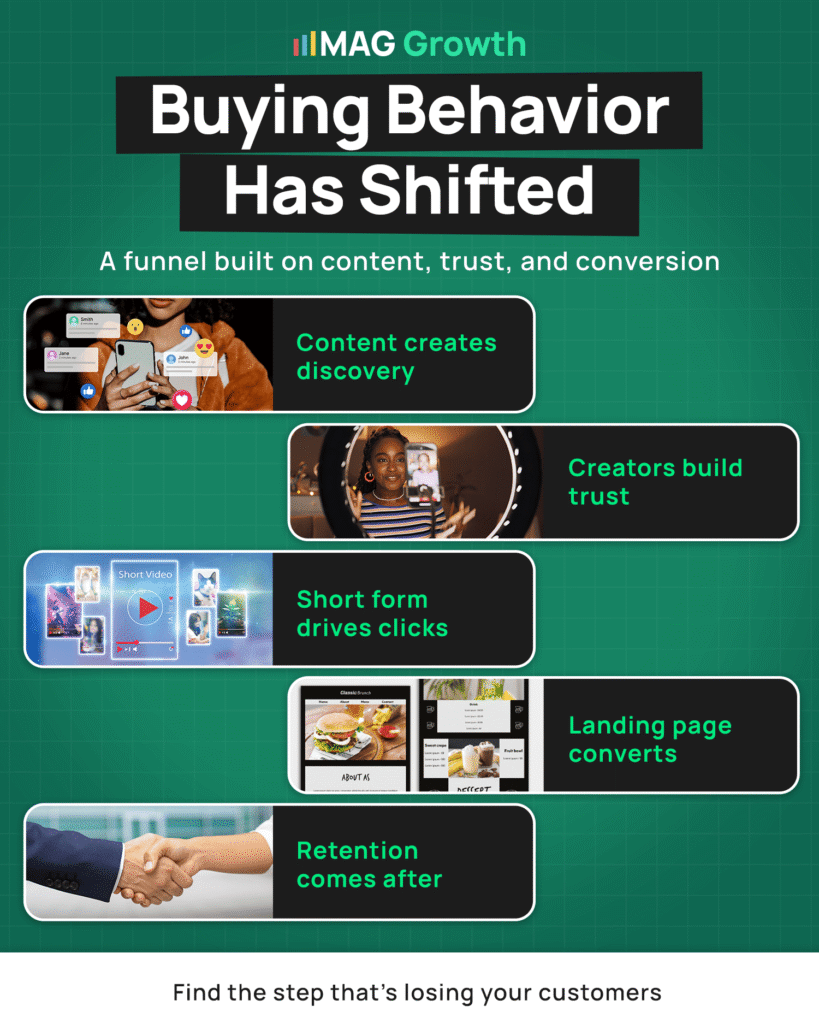
Assistants slot into the first stage and hand you the fourth. Your product page carries the sale that a machine already half-closed.
How should brands respond to channel diversification for AI-driven demand?
Judge channels on agent access alongside fees and margin. A channel machines cannot reach delivers the same dependency wearing a different outfit, not diversified demand.
Amazon-native brands should sequence the work like this.
- Repair catalog and feed data first
- Stand up a storefront supporting both protocols
- Point assistants at proof rather than marketing copy
- Hold Amazon spend steady while you build
- Track citations monthly from day one
What Top Performers Do Differently
Budget does not separate the top quartile. Sequencing does, and they started with the unglamorous half.
- They repaired data before chasing visibility. Average brands run a visibility tool, see a bad score, and buy content, while top performers audited attributes, schema, and crawler access first so their content investment landed.
- They treat the storefront as acquisition, not margin recovery. That reframing moved a decision the fee argument had stalled for five years.
- They held marketplace spend flat while building. Nobody funded this by cutting Amazon budget, because AI still supplies roughly 0.2% of sessions.
- They wrote for the comparison question. Assistants answer which-option-fits-my-situation questions, so top performers published specifications, use cases, and honest tradeoffs instead of brand narrative.
- They measured citations before clicks arrived. Running five buying prompts monthly gave them a baseline early, so they could prove compounding while sessions stayed small.
None of these moves needs a new line item. They need one decision, which treats catalog data as a growth job rather than an admin job, and most $5M to $20M brands have not made it yet.
I sat down with Sai Koppala of Commerce IQ in this video and walked through what that decision looks like inside a real operation.
The change management point separates the top quartile from everyone else. Buying the tool takes an afternoon, and rebuilding the workflow around it takes a quarter.
Our marketplace strategy and DTC growth work starts in the same place, because the feed and catalog layer compounds hardest.
Predictions for 2027
These calls come from what we manage, not from consensus forecasts.
Amazon opens to third-party agents on paid terms. Jassy already signaled partnership, and the appeals ruling weakened the case for keeping agents out, so expect access tied to advertising participation.
Platforms charge brands to be evaluated by their AI. Amazon confirmed ads still appear inside Alexa for Shopping when they support the shopping journey, and others follow once assistant sessions carry enough volume to price.
Feed quality becomes a public score. Platforms will publish readability ratings the way they publish account health, and brands that cleaned data early will look lucky.
AI-referred sessions cross 1% for mid-market brands. One point sounds trivial from 0.2%, and it arrives at conversion rates well above your site average.
Agencies get judged on citation share. The reporting line that matters names which brands assistants recommend for your top ten buying questions.
State of DTC AI Product Discovery Across Marketplaces 2026 FAQs
What is agentic commerce for sellers?
A machine performs the shopping steps a person used to perform, which changes who you persuade. Salesforce measured AI influencing about 20% of global online sales during the 2025 holiday season, so this shows up in revenue rather than in pilots.
What are the best marketplaces for AI product discovery?
Rank them by how easily outside assistants find and buy your products and your Shopify storefront leads, Walmart follows, and Amazon trails because it restricts external agents. Rank them by revenue and the order reverses, which is exactly why you hold both.
Amazon vs Shopify for AI shopping visibility, which wins?
Shopify wins visibility and Amazon wins volume. Amazon is where AI-assisted shoppers buy inside a closed system, and your storefront is where AI-referred shoppers land from everywhere else, which we break down in our comparison of where your brand can win on Amazon versus Shopify.
Do I need a DTC store for AI discovery?
You need a machine-readable property you control, and for most brands that means a storefront. Without one, every assistant recommendation in your category points somewhere else.
Is this worth doing at $2M in revenue?
Do the data work now and skip the tooling. Fix attributes, schema, and crawler access, run a manual citation check monthly, and revisit the storefront question when AI referrals clear 1% of your traffic.
What belongs on an agentic commerce readiness checklist?
Five items, in this order.
- Crawler access confirmed
Product schema published - Attributes complete across the catalog
- Feed inventory synced to real stock
- Comparison content written for real buying questions
Ready to Find Out?
We map your AI visibility across every channel you sell on and rank the fixes by revenue impact.