

TikTok Shop vs. Amazon for Product Discovery is one of the most common questions we get from brands crossing the seven-figure mark. Scaling founders ask us about it weekly when they decide on their next major growth channel.
This marketplace strategy guide is built for two operators. The first is the Amazon-native brand that wants independence, and the second is the scaling founder who needs tactical guidance on marketplace customer acquisition cost without the fluff.
You do not need to read to the end for the verdict. Amazon captures existing demand when buyers already know what they want, while TikTok Shop generates impulse purchases through social commerce product discovery.
Many brands assume they must pick between search algorithms and viral feeds. The reality is that the strongest operators treat these platforms as different stages of one customer journey, since TikTok demand often shows up later as branded search on Amazon.
Quick Comparison: TikTok Shop vs. Amazon for Product Discovery
| Factor | Amazon | TikTok Shop |
|---|---|---|
|
Primary driver |
Search intent |
Viral content |
|
Buyer mindset |
Actively shopping |
Scrolling for entertainment |
|
Platform referral fee |
8% to 15% by category |
6% flat most categories |
|
Fulfillment |
FBA network |
Fulfilled by TikTok |
|
Customer data |
Held by Amazon |
Held by TikTok |
|
Best for |
Established demand |
Impulse buying |
How Amazon Captures Search Intent Buyers
Amazon is a search engine built for shopping. Buyers arrive with a specific problem to solve or a product in mind, then type a query and expect immediate solutions.
You win here through keyword optimization and high conversion rates. The algorithm rewards listings that consistently turn clicks into Amazon sales, so ranking and relevance drive everything.
This model creates high customer acquisition costs through pay-per-click bidding wars. You compete directly on price against similar products on the exact same page, which squeezes margin.
Rising costs push many founders to consider Amazon to TikTok Shop expansion. Amazon raised FBA fulfillment fees by an average of $0.08 per unit starting January 15, 2026, which compounds fast across a full catalog.
Should I sell on TikTok Shop or Amazon?
Amazon is best for items with established search volume and proven utility. You capture buyers who already decided they need a product like yours, so you only have to win on value.
One brand we worked with sold household cleaning supplies and relied entirely on Amazon search. Customers bought those items out of necessity rather than impulse, and the steady search volume produced predictable monthly revenue.
Can Amazon sellers sell on TikTok Shop?
Yes, and many already do, but you cannot fulfill social commerce orders through standard Amazon fulfillment because of different packaging and tracking rules. You have to build separate workflows to run both channels at once.
This operational split takes capital and inventory planning. You commit to funding two supply chains so you do not stock out on either platform during a demand spike.
How TikTok Shop Drives Social Commerce Product Discovery
Selling on TikTok Shop in 2026 takes a different mindset. You intercept users who are scrolling for entertainment rather than shopping for a specific item.
The platform runs on an impulse model driven by short video. Roughly 70% of TikTok users report finding new brands through content, so creators showcasing your product is how discovery happens.
You do not wait for a search. You push your product into the feed through organic videos and paid ads, and a single viral video can generate thousands of sales in a few hours.
Is TikTok Shop worth it for DTC brands?
It is profitable if you have strong margins and a product that looks great on camera. You partner with creators through the affiliate network, paying commissions that usually run 10% to 20% per sale.
You also give up control over the exact marketing message. That tradeoff is what buys you authentic organic reach, which is the whole point of the channel.
How to drive product discovery on TikTok Shop?
You seed products to many micro-influencers and let the algorithm test their content. You double down on the videos that naturally generate engagement, then turn those winners into paid spark ads to amplify reach.
The platform now requires its own logistics system. As of March 31, 2026, US sellers cannot use independent carrier labels for most orders and must send inventory into the TikTok network.
We worked with a cosmetics brand that struggled with high acquisition costs on search channels. They shifted budget to social video and cut cost per acquisition by 40%, since their product offered an immediate visual transformation that stopped the scroll.
Evaluating the Core Business Impact
Before you commit to TikTok Shop vs. Amazon for product discovery, you must evaluate marketplace customer acquisition cost. Both platforms need real investment to gain traction, so the question is which one fits your strengths.
| Factor | Winner | Reason |
|---|---|---|
|
Buyer intent |
Amazon |
Users actively search for solutions to a problem |
|
Viral reach |
TikTok Shop |
Algorithm pushes content to non-followers instantly |
|
Margin control |
Amazon |
No affiliate commission on organic sales |
|
Demand creation |
TikTok Shop |
Content manufactures awareness from zero |
How do TikTok Shop vs Amazon fees for sellers compare?
Amazon charges a referral fee of roughly 8% to 15% for most categories, plus variable fulfillment fees by size and weight. Those combined costs often consume 30% to 45% of revenue.
TikTok Shop charges a flat 6% referral on most US categories, and that single fee already includes payment processing. You then add creator commissions if you use the affiliate network, which is where the real cost lives.
How do TikTok Shop vs Amazon profit margins differ?
Amazon margins depend on advertising efficiency and return rates. You keep more profit when you rank organically, and you lose money fast when pay-per-click campaigns fail to convert.
TikTok margins depend on your ability to generate organic viral content. A video that takes off without paid support protects your margin, while heavy reliance on ads and high affiliate payouts shrinks it.
How do TikTok Shop vs Amazon PPC for new customers differ?
Amazon ads target buyers by search term and competitor product. You bid to appear at the top of the page, which converts well because the intent is already there.
TikTok ads target buyers by interest and demographic. You interrupt the feed with a sponsored video, paying for impressions and engagement rather than strict keyword clicks.
The Amazon Search Halo Effect from TikTok Virality
Many shoppers discover a product on TikTok but prefer the trust of Amazon Prime. They close the social app and search for your brand directly on Amazon, and that branded search climbs when a video takes off.
This is the part of TikTok Shop vs. Amazon for product discovery that most brands miss. The two channels feed each other, since the discovery work on one shows up as capturable demand on the other.
How do you capture the overflow search traffic?
You run Amazon Sponsored Brands ads on your own brand terms to catch the buyers your videos send searching. Without that defensive coverage, a competitor can bid on your name and intercept the demand you paid to create.
That external traffic also signals Amazon’s algorithm that your product is in demand, which can lift your organic rank. TikTok creates the awareness, and Amazon captures the buyer who already knows your name.
Who Owns the Customer Data?
Data ownership is a major point of friction for scaling founders. Amazon protects buyer data closely and blocks sellers from accessing email addresses, so you cannot build a direct marketing list from Amazon profiles.
TikTok Shop follows a similar philosophy and keeps the transaction native to the app. You still do not own the direct relationship on either platform, which is the real limit of both.
How do you eventually own the relationship?
The long game on both channels is moving buyers to a store you control. You use packaging inserts, follow-up offers, and exclusive bundles to pull marketplace buyers toward your own Shopify site.
That owned channel is where repeat purchases cost almost nothing and where your real brand value compounds. The marketplaces are for discovery and capture, and your site is for retention.
The Hidden Cost of Returns
Impulse purchases come back more often than intentional ones. Buyers regret items they did not plan to buy, and TikTok deducts a refund administration fee of 20% of the original referral fee even when you lose the sale.
You also absorb reverse logistics and unsellable returned inventory. These costs quietly destroy margin if you do not model them before ordering stock, especially in high-return categories like apparel.
The Operational Cost of Content Production
Amazon requires static images and basic video assets. You optimize a listing once and make small tweaks over time, so the content workload is front-loaded and then light.
TikTok demands a relentless daily content engine. The algorithm rewards fresh creative constantly, so a single winning video is never enough to sustain momentum.
What team do you need to feed the algorithm?
You need a repeatable content operation, not a founder filming in spare moments. A workable structure pairs a content lead with one or two editors, a creator coordinator, and a paid-media owner who turns winning organic posts into spark ads.
This is the hidden cost that breaks most Amazon-native teams on TikTok Shop. The founder who tries to be the whole content engine burns out before the channel turns profitable, so the org chart matters as much as the ad budget.
Managing Creator Affiliate Networks
Both platforms lean on creators to drive external discovery, but the systems work differently. Amazon uses its Influencer Program with curated storefronts, while TikTok runs a large internal affiliate network built into the app.
The management overhead is where they split. Amazon pays the standard Associates schedule of roughly 1% to 10% by category and gives brands limited visibility into which creators drove which sales.
TikTok Shop hands the brand far more control. You set your own commission, usually 5% to 30%, and you can see per-creator and per-product performance to double down on winners and cut the rest.
That control is a double-edged sword for a lean team. More levers mean more recruiting, negotiating, and tracking, so you need someone owning the creator program full time once you scale past a handful of partners.
Customer Lifetime Value and Repeat Purchases
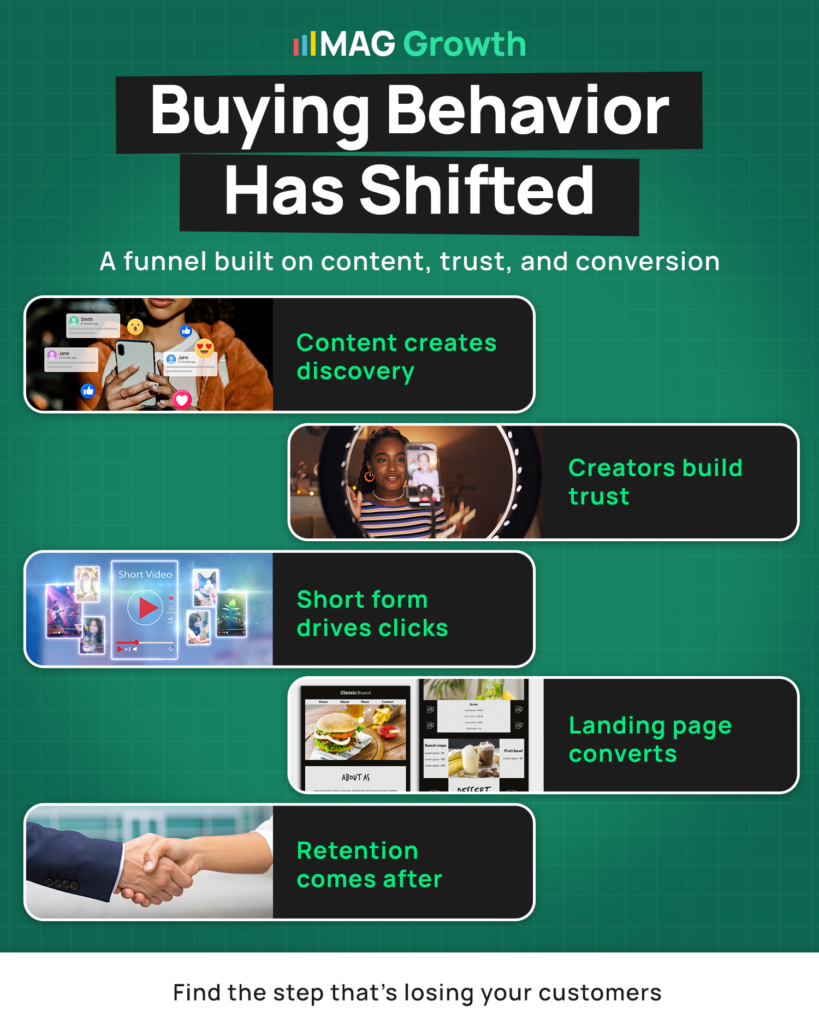
Which platform builds better twelve-month retention?
TikTok shoppers often buy on impulse and forget the brand name entirely. The purchase was driven by a moment of content, not a considered choice, so repeat intent is weaker without follow-up.
This is why TikTok Shop vs. Amazon for product discovery is not the whole picture. Amazon tends to win twelve-month retention on consumables, while TikTok wins first discovery, which is exactly why the smart move is routing both audiences toward a store you own for the long-term relationship.
Making the Final Platform Decision
You align your marketplace strategy with your core product strengths. You cannot force a technical product to go viral on a visual platform, and you cannot expect a novelty item to generate search volume on day one.
Does TikTok Shop work for established Amazon brands?
It works well when your product solves a visible problem or offers an aesthetic transformation. You can use your existing supply chain to feed a new audience, as long as you invest in video production to make the move work.
A stagnant brand will not grow just by switching platforms. The product and the content have to carry the discovery, not the channel alone.
Should I add TikTok Shop as a second channel?
You should only expand when your primary channel is stable and profitable. You need excess cash flow to fund the learning phase, since TikTok Shop usually takes a 60 to 90 day runway before consistent returns.
Do not launch a second marketplace while losing money on the first. You will only accelerate your cash burn rate without fixing the underlying problem.
What is the best marketplace for product discovery in 2026?
The best marketplace for product discovery in 2026 depends on your content capabilities. TikTok wins if you can produce authentic video at scale, and Amazon wins if you excel at supply chain management and search optimization.
If you sell a consumable with high repeat rates, prioritize Amazon, since subscribe and save builds recurring revenue. If you sell a visually striking product that needs demonstration, prioritize TikTok, since showing it in action drives immediate conversions.
The Recommendation
For most brands at $1M to $10M, the answer is not one channel, it is sequencing both correctly. The right call depends on where you stand today.
If you are an Amazon-native brand with a profitable, stable business, add TikTok Shop as a discovery layer. Use it to create demand, then let Amazon capture the branded search that follows, and fund the test with Amazon cash flow.
If you are a newer brand in a demo-friendly category like beauty, supplements, or apparel under $50, TikTok Shop is often the stronger starting point. Lower platform fees and creator-driven discovery beat fighting the Amazon PPC arms race before anyone knows your product exists.
What we typically recommend is treating the two as one system. In the TikTok Shop vs. Amazon for Product Discovery decision, TikTok Shop does demand creation, Amazon does demand capture, and neither channel is asked to do the other’s job.
Our team will audit your current mix and model where your next dollar earns the most, built on your real margins instead of a generic playbook.

TikTok Shop vs. Amazon for Product Discovery FAQs
Is TikTok Shop better than Amazon for product discovery?
TikTok Shop is stronger for generating brand new demand among users who did not know your product existed. Amazon relies on the customer to start the discovery through a search query, so it only reaches people already looking.
TikTok Shop vs Amazon for new product launches, which is better?
TikTok is excellent for launching visual products because you can manufacture virality through creators. Amazon needs a slow build of sales history and reviews to rank, which usually means funding expensive ads for early momentum.
TikTok Shop vs Amazon for impulse buys?
TikTok is built around the impulse purchase and removes friction by letting users buy inside the feed. Amazon shoppers tend to compare options and read reviews first, so the environment favors rational decisions.
Is TikTok Shop discovery sustainable for sellers?
The platform finalized a deal in January 2026 to form a new American entity, which removed the US ban risk that had hung over it for years. The viral model still creates spiky sales, so you need a steady creator program to maintain momentum.
TikTok Shop vs Amazon which converts better?
Amazon converts higher because buyers arrive with strong purchase intent. TikTok conversion is lower per view since you interrupt entertainment, but the audience pool is far larger and cheaper to reach.
We will pinpoint where fees, returns, and the wrong channel split are quietly draining your profit, then show you exactly what to fix first.