
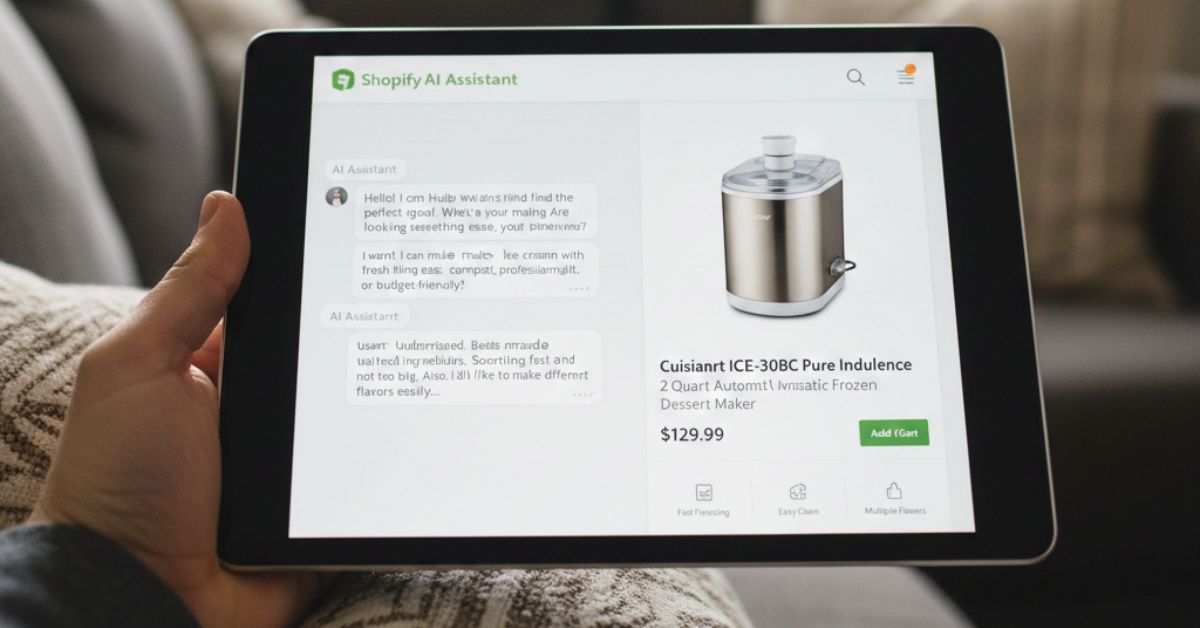

Traditional search engine optimization is no longer sufficient to maintain visibility or protect your profit margins. This creates a frustrating reality where you might wonder, “How do AI agents find products on Shopify?” while your competitors capture the market.
The decline you see is not a fluke. It is the direct result of the growing impact of zero-click searches on ecommerce revenue. Generative engines now act as gatekeepers. ChatGPT alone accounts for approximately 87.4% of AI-based traffic referrals in key industries.
Addressing “Why is my Shopify organic traffic dropping 2026?” requires a fundamental change in how you structure your product data.
Why Is Organic Traffic Dropping Despite Your SEO Efforts?
The shift in search behavior introduces new obstacles that traditional optimization alone cannot fix. A skilled digital marketing agency can help address these specific hurdles and take the first step toward reclaiming your lost traffic.
| Search Challenge | Root Cause | Actionable Solution |
|---|---|---|
|
Zero-Click Searches |
AI summarizes answers at the top of the search page |
Increase fact density and information gain |
|
Generative Discovery |
AI bypasses traditional ranking algorithms |
Add conversational context and natural language |
|
Incomplete Data |
Missing images or outdated shipping details |
Audit catalogs frequently and fix discrepancies
|
|
High Initial Investment |
Stiff competition over high-traffic terms |
Prioritize long-tail terms showing purchase intent |
What Happens When AI Answers Queries Directly?
Artificial intelligence models often summarize answers at the top of the search page. This eliminates the need for shoppers to click through to an ecommerce store.
Brands lose engagement opportunities when digital assistants synthesize answers directly. Store owners must structure Shopify product pages for AI agents with high information gain and fact density to become the primary cited source.
Adding unique statistics or expert quotes forces the AI to reference the specific product page. Verified facts give models a definitive reason to push your content to the top.
We structure your product data so generative engines recommend your brand first.

How Do Generative Engines Change Product Discovery?
Buyers increasingly start the shopping journey by asking questions to large language models. Generative engines operate differently than traditional ranking algorithms.
If an ecommerce site lacks conversational context, AI agents will ignore its products. Sellers need to update product pages with natural language and clear use cases.
Answering specific questions directly on the page helps AI agents parse the data effectively. This direct approach ensures the brand remains visible in modern shopping experiences.
Why Does Incomplete Data Hurt Your Store Visibility?
Missing images or outdated shipping details actively harm brand visibility. Generative engines analyze text and visuals simultaneously to produce recommendations.
Inaccurate product pages fail to trigger generative engine interest. Efficient ecommerce store management requires brands to audit product catalogs weekly or biweekly to fix discrepancies.
Clean data ensures the AI can confidently suggest the item to high-intent buyers. Consistent maintenance protects your bottom line from unnecessary traffic drops.
How Do You Beat Saturated Markets and High Upfront Costs?
Ranking competition is incredibly fierce for high-volume keywords in saturated markets. Search engine optimization requires high upfront costs and typically yields slow results.
Stakeholders often deprioritize initiatives when they do not see immediate financial returns. Store owners must target specific long-tail keywords that have lower search volumes but clearer buyer intent.
Identifying easy keywords provides quick wins that demonstrate a clear path to profitability. These smaller victories build the foundation for long-term revenue growth.
Neil Patel“SEO isn’t dead, but old tactics aren’t enough. Stay visible by adapting to AI Overviews, zero-click searches, and changing user behavior.”
How Do You Structure Shopify Product Pages for AI Agents?
Optimizing for large language models requires a specific approach to content and technical architecture. A specialized Shopify agency can implement the following steps to help ecommerce stores structure Shopify product pages for AI agents and capture AI-driven referrals.
How Do You Implement Comprehensive Schema Markup?
Knowing how to add schema markup for AI indexing Shopify ensures structured data acts as a direct translator for artificial intelligence bots. Adding proper markup to products and review sections is a mandatory step for AI indexing.
This code helps models extract prices and stock status without guessing. Verified facts reduce the chance of an AI hallucinating information about a brand.
Store owners must regularly test structured data using rich result testing tools. Spotting errors early ensures everything remains readable by search engines and automated bots.
Integrating organization details into the schema provides additional verification layers. This extra step gives AI agents explicit facts to use when recommending products.
How Do You Expand Your Semantic Footprint?
Search models use a query fan-out technique to understand related concepts. Pages must cover the entire spectrum of a topic rather than focusing on a single keyword phrase.
Store owners should include detailed frequently asked questions and related internal links on every product page. This builds topical authority and helps the site appear across broader demand clusters.
Connecting products to blog posts and help center articles shows clear expertise. A logical mapping strategy proves to the AI that your site offers comprehensive value.
How Do You Increase Fact Density on Product Pages?
AI models reward content that provides new and verifiable information. Adding proprietary data or customer survey results increases the chance of being cited.
Sellers should modularize these facts into tables or short lists. Extractable formats make it much easier for large language models to reuse the data in their summaries.
Performing an information gain analysis helps pinpoint exact gaps in current product copy. Brands must review competitor pages to see what specific statistics or expert quotes they lack.
Adding superior references to a page increases overall trustworthiness. High-authority citations from research studies act as strong grounding signals for AI rerankers.
Why Should You Write Conversational Copy?
Artificial intelligence systems excel at parsing natural human language. Product descriptions must clearly state who the product is for and how it solves specific problems.
Using terms like “ideal for marathon beginners” provides better context than standard feature lists. This context aligns perfectly with how modern shoppers prompt digital assistants.
Keyword stuffing and robotic product listings actively harm AI visibility. Content must address common customer concerns with genuine helpfulness.
Brands should add robust frequently asked questions to every item listing. Prioritizing context and quality over keyword frequency is the only way to achieve strong indexing.
How Do You Prioritize an Answer-First Structure?
The core answer to a shopper’s potential question should appear immediately after the page heading. This placement allows models to extract it quickly as a direct response.
Burying important specifications at the bottom of the page reduces the likelihood of citation. Clear hierarchy helps rerankers select the most relevant passages.
Digital assistants do not read pages the way human shoppers do. They parse data looking for definitive answers to specific user prompts.
Structuring content to lead with the most important facts caters directly to this machine behavior. Every section should aim to solve a real problem immediately.
Turn zero-click searches into revenue with our proven generative optimization strategies.
How Do You Fix Accessibility and Navigation Issues?
Digital accessibility is moving from a compliance task to a core requirement for AI interpretation. Unclear structure and unlabeled interactions create friction for automated systems.
Our Shopify CRO agency understands that creating predictable experiences reduces cognitive load for both human visitors and AI crawlers. Stable navigation ensures models can comprehend site information with absolute confidence.
Properly labeling buttons and menus helps AI agents map out the entire website. This clarity directly translates to higher citation rates in generative answers.
Why Must You Adopt a Multimodal Approach?
Generative engines analyze text, images, and videos together to produce optimized answers. Relying entirely on written copy limits a brand’s potential reach.
Store owners must optimize their media assets to prevent slow load times. Compressing files into modern formats reduces data burdens without compromising visual quality.
Repurposing long-form content into shorter video clips captures traffic across various search behaviors. A strong off-site profile on video platforms builds the authority that AI models respect.
What Are The Best Practices for Generative Engine Optimization?
Success in the current market requires balancing traditional optimization with new generative strategies. A seasoned ecom agency helps brands integrate both disciplines to protect visibility.
Adopting a Shopify product page template for large language models ensures you meet the technical priorities outlined below.
| Strategy | Traditional Optimization | Generative Engine Optimization |
|---|---|---|
|
Primary Goal |
Ranking high on search pages |
Being cited directly in AI answers |
|
Keyword Focus |
High-volume exact match phrases |
Conversational long-tail questions |
|
Content Structure |
Standard product feature lists |
Answer-first formats and rich FAQs |
|
Technical Priority |
Fast load speeds and backlinks |
Comprehensive schema and structured data |
How Do You Focus on Experience and Expertise?
Search engines heavily prioritize human-written content that shows real familiarity with a subject. Increasing fact density in product descriptions allows brands to demonstrate firsthand knowledge through authentic reviews and detailed case studies.
Adding insights from industry professionals builds the trustworthiness required to rank well. Independent customer feedback carries significant weight when AI models evaluate site authority.
Years of experience operating ecommerce storefronts show that buyers crave authenticity. Real-world testing and honest product feedback will always outperform theoretical advice.
Why Should You Partner with Performance Marketing Experts Like MAG Growth?
Sustainable ecommerce growth relies on consistent effort and thoughtful planning. Partnering with an agency like MAG Growth provides access to proven acquisition and retention strategies.
MAG Growth helps brands scale profitably through targeted meta advertising. The team also implements email lifecycle marketing. We conduct optimization testing to structure Shopify product pages for AI agents, capturing high-intent traffic.
Lasting growth relies on ongoing post-launch efforts to improve traffic and engagement. A well-designed approach maximizes revenue opportunities while lowering acquisition costs.
The team removes friction between creative strategy and technical execution. This unified approach connects compelling storytelling with the data required to scale in modern commerce.
McKinsey & Company analysis“AI is now the primary source of information for 44% of users while only 31% still rely on traditional search.”
How Do You Measure AI Visibility?
Store owners should track citations and brand mentions as primary performance metrics. Monitoring how often a brand appears in generative answers reveals the true impact of a content strategy.
Visitors referred directly from large language models convert at twice the rate of traditional traffic sources. Capturing this high-intent audience requires ongoing attention to how models interpret site data.
These buyers also complete their journeys in one-third the number of sessions. Fast decision cycles mean your site must deliver precise information instantly.
How Do You Consolidate Omnichannel Content?
Centralizing all product content ensures consistency across every consumer touchpoint. Accurate syndication prevents AI models from finding conflicting information about prices or features.
Brands should enrich pages with high-quality media to create immersive experiences. Clean data across all channels solidifies the brand as a reliable source for artificial intelligence agents.
Maintaining strict version control over product details builds a moat around your profit margins. Proper Shopify management ensures a centralized catalog that prevents errors that could disqualify your site from AI recommendations.
Frequently Asked Questions About AEO and GEO
What Is the Difference Between Traditional Optimization and Generative Engine Optimization?
Traditional optimization focuses on winning website traffic from standard search engines. Generative engine optimization ensures a brand is cited as a trusted source within AI-generated responses.
Both disciplines are necessary for full visibility. Integrating them protects your business from sudden algorithm shifts.
Why Is Organic Traffic Dropping for Ecommerce Stores?
Artificial intelligence models are answering user queries directly on the search page. This creates zero-click searches where buyers get the information they need without visiting a website.
Adapting to this shift requires you to structure Shopify product pages for AI agents for machine comprehension. Brands that fail to update their formatting lose out to competitors who embrace AI indexing.
How Does Structured Data Improve AI Visibility?
Structured data provides explicit facts about products like price and availability. AI agents parse this code rather than reading the page visually.
Clean schema markup prevents the models from hallucinating incorrect details about the brand. Providing this direct translation layer is mandatory for modern search success.
What Is Information Gain in Search Optimization?
Information gain refers to providing new and verifiable facts rather than repeating existing data. AI models prioritize sources that offer unique insights or proprietary statistics.
Adding expert quotes and specific use cases increases the chance of a page being cited. This strategy directly combats the noise created by generic content mills.
How Does Page Speed Impact AI Indexing?
Slow page speeds actively harm both user experience and automated crawler efficiency. Pages that load in under two seconds are significantly more likely to convert visitors.
Optimizing server infrastructure and compressing rich media ensures bots can parse data quickly. Fast performance remains a fundamental requirement for any successful online storefront.
What Metrics Matter Most for AI Traffic?
Brands should track direct brand mentions and citations within generative answers. Visitors arriving from AI summaries complete purchases in one-third the number of sessions.
Using Shopify AI visibility audit services helps measure the true return on investment. Adjusting strategies based on these citations guarantees sustainable profit protection.
How Can MAG Growth Assist with Ecommerce Site Expansion?
MAG Growth is an ecommerce agency for Generative Engine Optimization that provides specialized services in acquisition, retention, and conversion rate optimization. The team implements paid search and influencer marketing to drive demand.
They build automated email flows to encourage repeat purchases and loyalty. This comprehensive approach turns a standard website into a highly profitable sales engine.
Build a Defense Against Zero-Click Search
Zero-click searches are removing traditional opportunities for engagement on your ecommerce site. Your brand needs to become the primary cited source to survive this shift and reach high-intent buyers.
MAG Growth Shopify optimization services provide the strategy required to increase your fact density and authority. This approach turns a potential threat into a consistent new revenue channel.
Partner with MAG Growth to integrate paid social, email, and AI visibility.